
Over the last few years, some of our favorite vacations have centered around ski resorts - in the summer. We’ve had some amazing long loop runs in the mountains, but there’s something equally satisfying about burning our quads and lungs for a shorter but steeper push up a route designed for maximal downhill pleasure.
We do take the term “running” loosely here, as most of our favorite ski hills require more hands-on-knees hiking, or poles if you prefer. As aging adventurers and athletes, we increasingly look for strength-based projects like a tough ski hill climb, often with the relief of a gondola ride down. Steep running or hiking builds muscular endurance with ample stimulus for our aerobic system and minimal skeletal impact. While it’s almost all about the gritty journey to the top, many of these mountains offer not only the reward of a spectacular view, but cold pints and unique treats, which admittedly feed our motivation.
Check out Our Favorite Destination Ski Resorts for Big Adventures
 Susan Lieto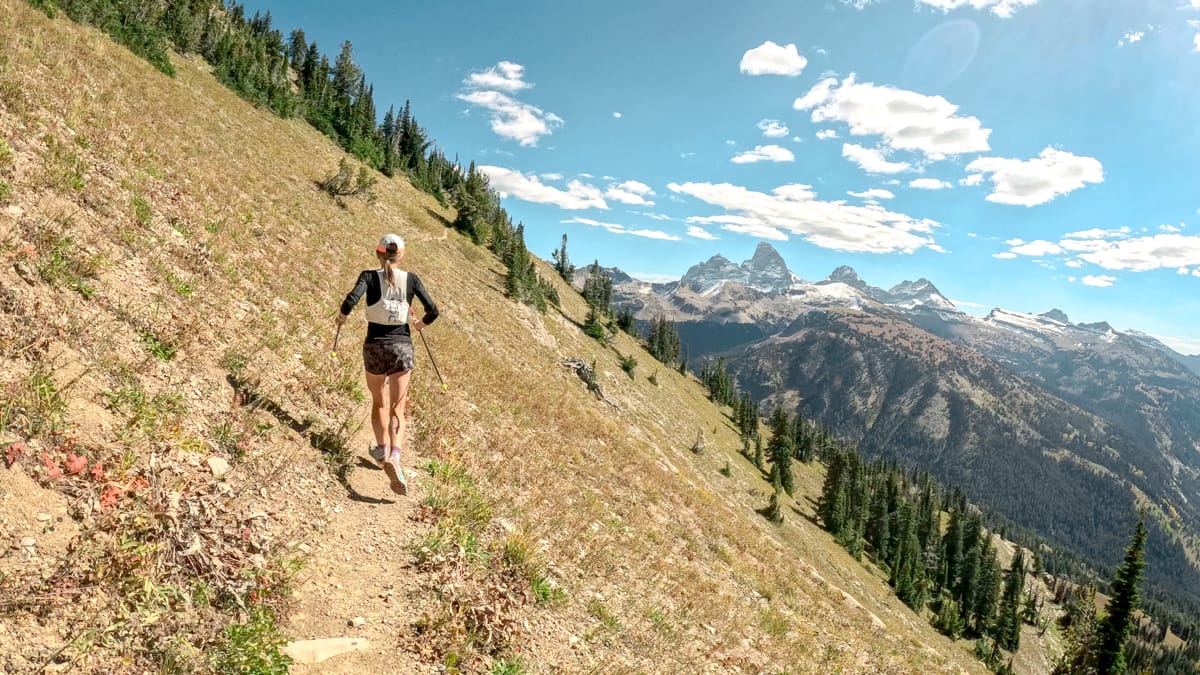
Fast After 50: Why the Pendulum Swung Back to Aerobic Base
Uphill Athlete, Steve House, has Joe Friel on the Podcast
Joe Friel's original Fast After 50 book, published in 2012, told masters athletes to add intensity because they were doing too much slow, steady mileage. The new second edition makes almost the opposite case: masters athletes today are doing far too much high-intensity work and not nearly enough low-intensity base training.
Takeaways →
- Aerobic fitness decays and must be reloaded. Mitochondrial density, capillarization, and fat-oxidation capacity aren't banked from decades-old training — they require continuous rebuilding. An athlete who built a base in their 30s doesn't still have it in their 50s without ongoing work.
- The stakes are higher after 50, not lower. Recovery between hard sessions stretches from 24–48 hours to 48–72 hours, injury risk climbs, and a two-week injury can cost roughly 5% of a masters athlete's training year — plus deconditioning on the back end. Skipping the base doesn't save time; it gets paid back with interest.
- Base gains are invisible week-to-week. Mitochondrial and capillary adaptations are real and load-bearing but don't show up on Strava. Athletes are becoming programmed and dependent on seeing progress via segment improvements and Strava data, this becomes a recurring frustration for aging athletes whom aren’t going to be better than the previous version themself. These adaptations, while not as measurable, are critical to durability and longevity as we age.
- Polarized (80/20) training matters more, not less, with age. Roughly 80% low intensity, 20% high, with the "moderate/threshold" zone — hard to recover from, not hard enough to drive adaptation — kept minimal.
- Practical reset: limit intensity to one or two sessions weekly with 48–72 hours recovery between them, and plan 12–16 weeks of consistent base work before pushing intensity blocks again.
- Framing shift: for masters athletes, training becomes less about peak performance for a specific race and more about sustaining athletic identity across decades — Friel, now 82, frames it as a lifestyle rather than race prep.
- Female-specific note: same framework holds, with adjustments — a slightly longer recovery window (often three days rather than two) during high-symptom perimenopause weeks, and increased strength-training emphasis to slow sarcopenia.
50+ / Masters Performances of Note
On June 28, Jeff Browning, 54, of Flagstaff, Arizona, sets new 50-59 record at Western States Endurance Run with a time of 18:03. The run’s final official finisher was Mike Smith, 68, of Santa Fe, N.M., who ran 29:58:31. The oldest female finisher was 64-year-old Stephanie Irving of Trout Lake, Washington, who finished in 29:27.
This past weekend, July 11, Ludovic Pommeret, the 50-year-old Frenchman, won the 2026 Hardrock 100 for the third year in a row, setting a new course record of 21:11:36 and breaking his own previous mark by nearly 22 minutes.
Ultrarunner Courtney Dauwalter reinforced her standing as one of the sport's all-time greatest competitors, taking the women's title in a time of 26:03:10 — improving on her own clockwise course record by upwards of eight minutes. Courtney is 41, and placed 5th overall.
Note: Half of the top 10 finishers were in their 40s or 50s. Of the top 30 finishers, 7 were female — two in their 40s and one in her 50s. Of the remaining 23 males, 17 were over 40 years old, with 6 cresting 50.
Dale “Grey Beard” Sanders once set the record as the oldest person to complete the roughly 2,190-mile Appalachian Trail. Now, at 91, he’s back to regain his title.


